

What Makes Video Production Cinematic, and When Montreal Brands Should Pay For It
Every Montreal agency promises cinematic video and almost none define it. Here is what actually creates the look, why it costs more, and the cases where a business genuinely should not pay for it.
Cinematic is the most abused word in video production. Every agency in Montreal puts it on their website, including us, and almost nobody explains what they mean by it. For a business trying to compare quotes, that is a real problem. Two companies can both promise cinematic video and deliver work that looks nothing alike and costs three times apart.
So let us take the word apart. What actually creates the look, what it costs, and the more useful question underneath it all, which is whether your business needs it.
The honest definition
Cinematic does not mean expensive, and it does not mean a particular camera. It means the footage was shot with deliberate control over how the image looks, rather than just capturing what happened in front of the lens.
That is the whole distinction. A documentary crew filming an event is recording reality. A cinematic shoot is constructing an image. Same camera, completely different process, and the viewer can tell instantly even though most people cannot say why.
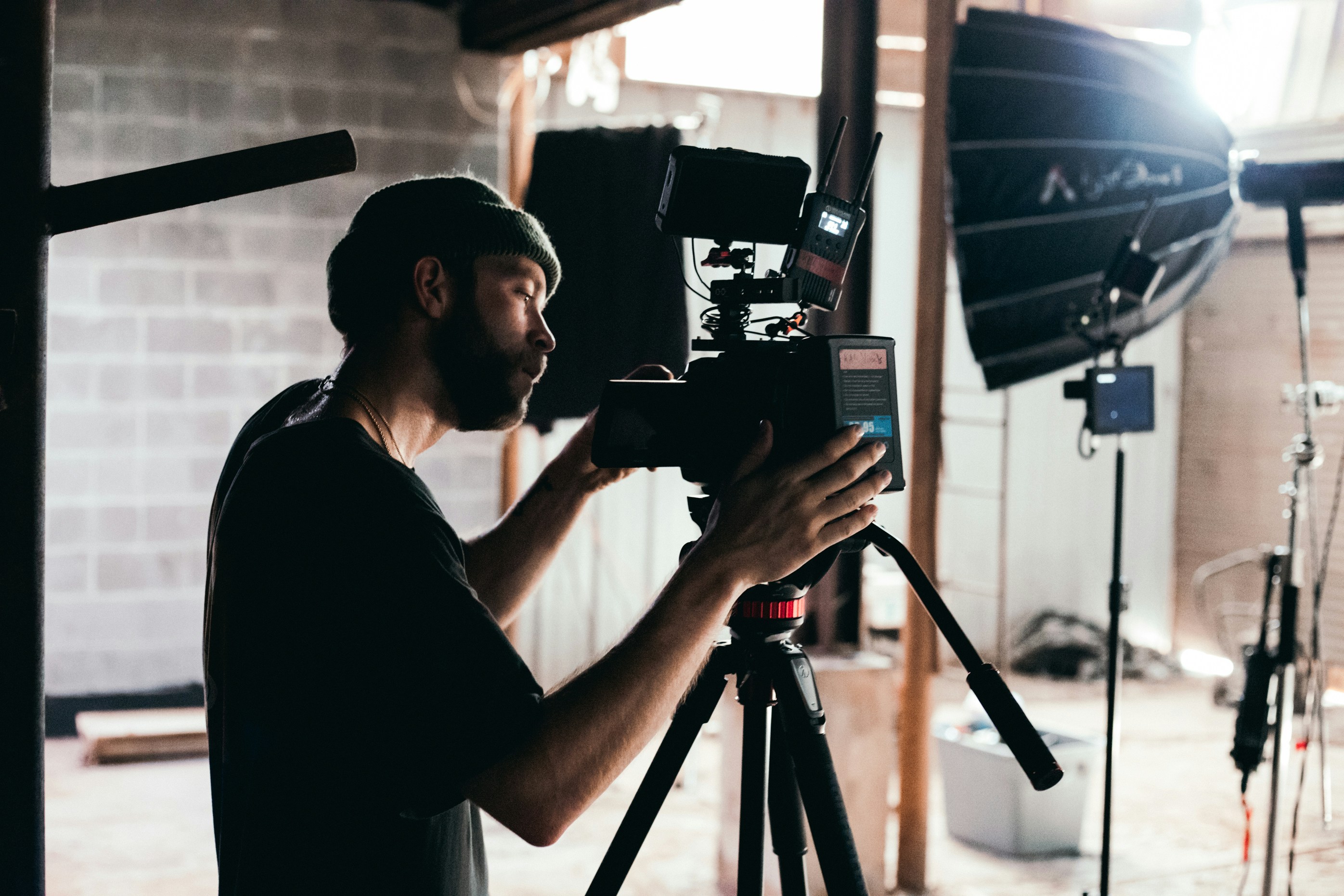
What actually produces the look
Lighting is most of it. If you only change one thing about how your video is produced, change this. Lighting is what makes skin look healthy instead of grey, what separates a subject from the background, and what gives a room depth rather than flatness. A modest camera in controlled light beats an expensive camera in bad light every single time. When people describe footage as looking cheap, they are almost always reacting to lighting.
Shallow depth of field. The blurred background effect. This comes from fast lenses and sensor size, and it signals intentionality because it forces the viewer to look where you decided they should look. Worth noting that it is overused. Everything blurry all the time reads as amateur in a different direction.
Camera movement with a reason. A slow push toward a subject builds tension. A drifting handheld shot creates unease. Random movement because the operator could not hold still creates nothing. Cinematic work moves the camera when the movement means something and locks it off when it does not.
Colour grading. This happens in post and it is where a lot of the perceived quality lives. Grading is not applying a filter. It is balancing every shot so the whole piece feels like one coherent world, then pushing the palette in a direction that supports the mood. Poorly graded footage looks inconsistent from cut to cut even when each individual shot is fine.
Sound. Consistently the most underestimated element. Audiences forgive a mediocre image and abandon a video with bad audio within seconds. Clean dialogue, considered music, and actual sound design do more for perceived production value than almost any visual upgrade at the same cost.
Framing and composition. Where the subject sits in frame, what is behind them, how much headroom there is. Free to get right, and the difference between a shot that feels composed and one that feels grabbed.
Why it costs more
None of the above is expensive because of equipment. It is expensive because of time and people.
Lighting a scene properly takes an hour that a run and gun shoot does not spend. Controlled camera movement needs a gimbal operator or a slider and someone to run it. Colour grading is a skilled post role charged by the day. Sound design means a separate audio track and someone mixing it. Deliberate framing means a director making decisions on set rather than a single operator improvising.
A documentary style shoot might be one person for half a day. A cinematic shoot of the same subject might be four people for a full day plus two days of post. That is the entire cost difference, and it has nothing to do with which camera came out of the bag. We laid out the actual numbers by format in our guide to video production costs in Montreal.
When it is worth paying for
This is where most advice goes soft, so here is a direct answer.
Pay for it when the video carries your brand positioning. A brand film on your homepage, a launch piece, a recruitment video for senior hires, anything where the production quality is itself part of the message. If you are charging premium prices, video that looks cheap actively contradicts your pitch.
Pay for it when the asset has a long life. A cinematic brand film shot properly is still usable in three years. Spending more on something that amortises over years is a different calculation from spending more on something that disappears from a feed in forty eight hours.
Pay for it when you are in a category where craft is the product. Hospitality, real estate, fashion, fitness, food. If the buying decision is partly aesthetic, your video is doing sales work that a spec sheet cannot.
When it is not worth paying for
Skip it for volume social content. Short form video on Instagram and TikTok rewards frequency, authenticity, and hook strength. Heavily produced content often underperforms rougher content on those platforms, and it costs more per asset. Ten decent reels usually beat two beautiful ones. Our social media content work is deliberately built for that volume rhythm rather than cinematic polish.
Skip it for internal or functional video. Training material, how to guides, internal announcements. Clear and audible is the entire requirement.
Skip it for genuine event coverage. Documenting a real event well is a different skill, and trying to make it cinematic usually means missing moments while you light a shot.
Skip it if you cannot afford to do it properly. This is the important one. Half funded cinematic video is worse than well executed simple video, because the ambition is visible and so is the shortfall. Better to shoot something clean and honest than something that reaches for a look and misses.
How to tell whether an agency can actually deliver it
Look at their reel, then ask two questions about it.
First, does the lighting look consistent across different projects, or does one piece look great and the rest look flat? Consistency tells you it is a repeatable process rather than one lucky shoot.
Second, ask what the crew was on a specific piece you liked. If a piece you are admiring was shot by a four person crew and they are quoting you a solo operator, you are not getting that piece.
It is also worth asking who does the grade. If the answer is vague, colour is probably being handled as an afterthought, which is where a lot of the quality you are paying for would have come from.
The Montreal angle
Two things are genuinely true about producing this kind of work here.
Montreal has deep film and television crew infrastructure because of the production industry that has operated here for decades. The practical effect is that experienced gaffers, camera operators, and colourists are available at rates well below Toronto or New York, which is why cinematic production is more accessible here than the same work would be in a larger market.
The second thing is bilingual delivery. If your video carries dialogue, voiceover, or on screen text, it needs a French version, and that decision has to be made before the shoot rather than after. On screen graphics have to be built in a way that allows a second language pass. Retrofitting that costs more than planning for it.
How we approach it
Our video production in Montreal spans both ends of this. Some clients need a cinematic brand piece that will anchor their site for two years. Others need thirty social clips a month, and we deliberately do not shoot those the same way.
What we will do is tell you which one your situation calls for, including when the answer is the cheaper one. Video sits inside our broader content creation services for that reason, since the right answer often involves photography or social assets rather than more video.
The takeaway
Cinematic means controlled, not costly. It comes from lighting, deliberate movement, colour grading, and sound, and it costs more because it takes more people and more time rather than better gear.
It is worth paying for when the video carries your positioning or will be in use for years. It is not worth paying for on volume social content, functional video, or on a budget that cannot support doing it properly. Any agency that recommends it for everything is selling, not advising.
Continue Exploring Our Insights, Useful Tips and Tricks
Frequently Asked Questions
Find answers to common questions about our services and how we can help you.
Yes. You’ll be assigned a dedicated strategist or project lead who manages your services, communicates progress, and ensures quality delivery. You’re never left guessing or chasing updates.
Each engagement is mapped out with milestones and deadlines. Whether it's content, SEO, or web development, you’ll know what’s being delivered, when, and what’s needed from your side (if anything).
Digital marketing costs in Montreal range from $1,500–$10,000+ per month depending on services, campaign size, and goals. At Mavesta Media, we build custom strategies combining video, SEO, paid media, and content — so every dollar drives real ROI for your business. Book a discovery call to discuss your budget and priorities.
Compared to Toronto and New York, Montreal agencies typically offer significantly lower costs without sacrificing talent or creative quality. Montreal's bilingual creative ecosystem produces world-class strategists, filmmakers, and designers at more accessible rates. At Mavesta Media, you get agency-level strategy and production quality — with the personalized attention of a boutique team focused entirely on your growth.
Still have questions?
We're here to help you!

INVEST
IN YOUR